The expat document problem: keeping two countries' paperwork intact
For families split across the UK and Spain, losing a single document, a NIE certificate, a foreign property deed, can freeze an estate for months.
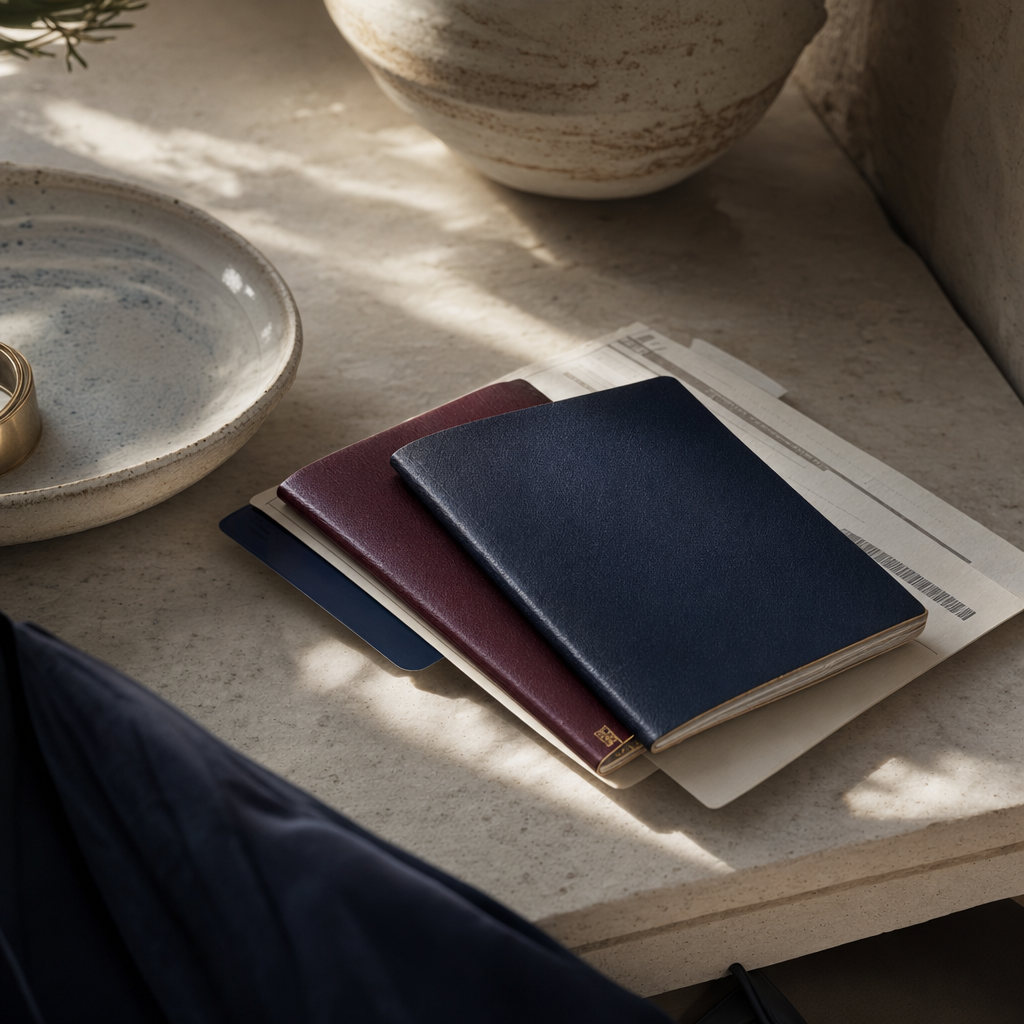
The call came on a Tuesday morning. A solicitor in Málaga, polite but unhurried, explaining that the escritura, the notarised deed for the family's apartment in Nerja, could not be located. The English executor had searched the filing cabinet, the fireproof box, the bottom drawer of the study. Nothing. Until a certified copy was obtained from the Spanish notary and apostilled, probate on the Spanish estate could not proceed. The apartment sat empty for eleven months.
That story is not unusual. Among British families with a second home in Spain, France or Portugal, a property deed is the single document most likely to have been filed once, never copied, and quietly forgotten. When the owner dies or loses capacity, its absence costs time and money that are almost entirely avoidable.
What the paperwork actually consists of
Expat document management sounds like an administrative chore. In practice it is closer to running a parallel legal identity across two jurisdictions, each with its own formats, renewal cycles and consequences for failure.
On the Spanish side alone, a British national who owns property or has residency will typically hold:
- A NIE number certificate (Número de Identidad de Extranjero), the tax identification number issued by the Policía Nacional. The number itself does not expire, but the physical certificate is often required when selling property, opening accounts or dealing with notaries, and older paper versions are routinely questioned.
- A TIE or green residencia card, for those who established residency before or after Brexit, each with different renewal requirements and legal standing.
- The escritura pública for any property, the notarised deed that proves ownership. Spanish law does not automatically register ownership in a publicly searchable way that makes the deed redundant; the document itself retains evidentiary weight.
- Modelo 720 declarations and historic tax filings, particularly relevant if assets above certain thresholds were held in the UK and declared to the Spanish tax authority, Agencia Tributaria.
On the British side, the same family is maintaining a parallel set: UK passports (with their ten-year replacement cycle), HMRC self-assessment records showing foreign income declared under the arising or remittance basis, a UK will that is properly worded to coexist with a Spanish will rather than revoke it, and potentially a Lasting Power of Attorney that may or may not be recognised by a Spanish notary without additional legalisation.
Each of these documents has a different issuing authority, a different format, and a different failure mode. A lapsed passport delays travel and property transactions. A missing NIE certificate stalls a sale. A UK will that inadvertently revokes a Spanish will creates an intestacy in one jurisdiction even while probate proceeds in the other.
The cost of losing one piece
The practical costs are easier to quantify than people expect. Obtaining a certified copy of a Spanish escritura from a notary, apostilling it, and having it translated for use in English proceedings typically runs to several hundred pounds, plus the notary's own fees. Replacing a lost TIE card involves an appointment at the Consulate or a trip to Spain, proof of address, biometrics, and a wait that can extend to several months. If the loss is discovered during probate, those months are months in which beneficiaries wait.
The less visible cost is accuracy. Documents retrieved under pressure, from old email attachments, from memory, from a photocopy of a photocopy, frequently contain errors. A name spelled differently on a NIE certificate and a property deed is a discrepancy that Spanish notaries and registrars will not simply overlook. Correcting it requires a separate legal process.
There is also the cross-border tax dimension. A family navigating both HMRC and Agencia Tributaria needs to demonstrate, sometimes years after the fact, what was declared, when, and under which treaty provisions. If the self-assessment returns are archived on a laptop that is no longer accessible, or the Modelo 720 filing was handled by an adviser whose records are incomplete, reconstructing that history is slow and expensive. Neither tax authority is unsympathetic, but neither will simply accept an assertion in place of documentation.
The discipline that prevents all of this is straightforward, if rarely practised consistently: maintain a single, complete record of every document relevant to your cross-border life, with the original or a high-quality scan, the issue date, the expiry or renewal date if applicable, and the issuing authority. Keep it somewhere that a trusted family member or professional can access it when you cannot. Review it annually, passports expire, residency cards require renewal, and wills drafted before Brexit may need revisiting in light of EU Succession Regulation considerations.
None of this requires a complicated system. It requires the intention to do it, and a place where it is done.
If you are ready to bring that discipline to your own cross-border paperwork, Glenvault is designed for precisely this, start at glenvault.com/signup.
The private vault for your family
Documents, wealth and succession protocols in one quiet, encrypted home. Start free — no card required.
Sign up to Glenvault