The twelve documents every UK household should find in five minutes
From passports to lasting powers of attorney, these are the twelve documents every UK household needs to locate quickly, and a calm method for organising them.
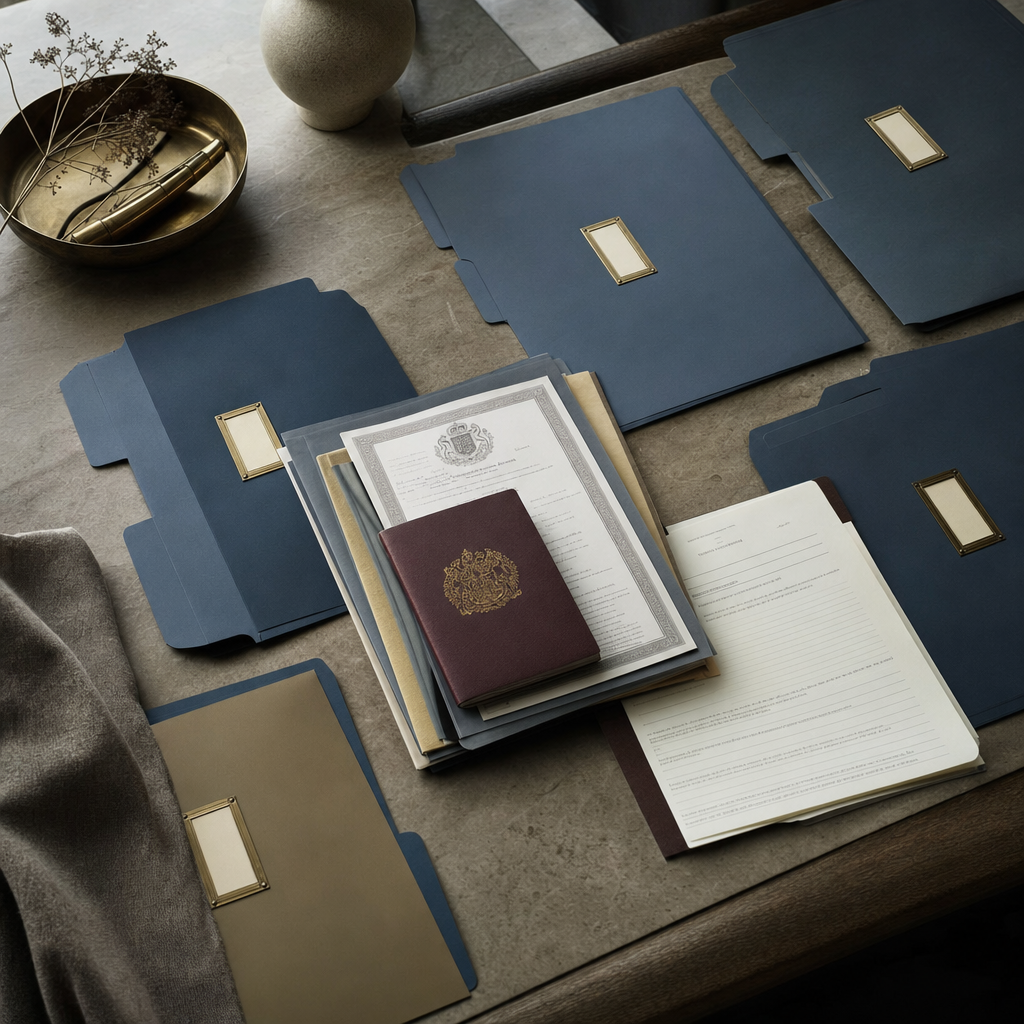
A solicitor once described a common scene at the start of a probate matter: the family seated around a kitchen table, opening every drawer, lifting every folder, searching for a will they were certain existed. Two hours later they found it inside a cookbook. The grant of probate was delayed by three months.
That scene is entirely preventable. The documents themselves are rarely the problem. The problem is not knowing where they are, or not knowing they need to be somewhere deliberate at all.
What follows is a practical register of the twelve documents that, between them, cover identity, property, health, wealth and death. Having them organised does not require a filing cabinet the size of a wardrobe. It requires a single session, a consistent method, and a place, physical or digital, that the right people can reach when it matters.
The twelve documents
1. Passports. For every adult and child in the household. Note expiry dates somewhere visible; a passport discovered to have lapsed during a medical emergency abroad is a particular misery.
2. Birth certificates. Original long-form certificates for every family member. These are required for passport renewals, school enrolments, probate and numerous other purposes. Certified copies from the General Register Office are obtainable, but time costs money.
3. Marriage or civil partnership certificate. Required for name-change evidence, next-of-kin confirmation and inheritance matters. Couples who married abroad should also retain any apostille or translation.
4. The will. The most important document on this list for what happens after death. It should be the most recent version, signed and witnessed correctly. If a solicitor holds the original, note their details alongside a copy.
5 & 6. Lasting Powers of Attorney, property and financial affairs, and health and welfare. These are separate documents and both matter. Without a registered LPA, even a spouse may find themselves unable to manage a partner's finances or direct their care should that partner lose capacity. Registration with the Office of the Public Guardian can take several months; the time to begin is well before any need arises.
7. Property deeds and Land Registry title. For most registered properties in England and Wales, the official title is held electronically by HM Land Registry and can be retrieved online. Still, keep the original transfer deed and any accompanying documents, rights of way, covenants, leasehold agreements, in one place. If you own property abroad, the paperwork is likely paper-only.
8. Buildings and contents insurance policies. Include the insurer's name, policy number, and the claims contact. After a flood or fire, finding this information in the wreckage is not straightforward.
9. Life insurance and critical illness policies. Many policies go unclaimed simply because no one knew they existed. Note not only the policy schedule but whether it is written in trust (which affects how the payout is treated for inheritance tax purposes, a question worth putting to your adviser).
10. NHS records and GP details. Not a single document, but a clear note of NHS numbers, GP surgery, consultant names and any ongoing prescriptions. In an emergency, this information saves time and reduces error.
11. Pension details. Workplace and private pension scheme names, reference numbers, and crucially, any expression of wishes or nomination of beneficiary forms. These nominations are not legally binding, but trustees give them significant weight; an out-of-date nomination pointing to an ex-spouse is a common and correctable problem.
12. A contact sheet for professional advisers. Solicitor, accountant, financial adviser, mortgage broker. When a family is managing an estate or a sudden incapacity, knowing who to call is half the task.
A calm method for getting there
Set aside two hours on a weekend. Work through the list above and note, for each document, three things: whether you have it, where it physically is, and whether the information on it is current.
For physical originals, birth certificates, signed wills, original LPAs, a fireproof document wallet kept in a consistent location is sufficient. Tell at least one trusted person where it is.
For the reference information, policy numbers, adviser contacts, pension details, a secure digital record that is accessible to the right people without requiring a physical search is considerably more practical. This is precisely what a private family vault is for: not a replacement for originals, but a reliable record that survives the chaos of an emergency and can be shared with a solicitor, a co-executor or an adult child at a moment's notice.
The goal is not a perfect archive. It is the ability to answer, in under five minutes, any question that grief, illness or urgency might require you to answer.
Glenvault is built for exactly this kind of quiet organisation, start at glenvault.com/signup.
The private vault for your family
Documents, wealth and succession protocols in one quiet, encrypted home. Start free — no card required.
Sign up to Glenvault